
 Verified April 2026
Collagen Products: Do They Work?
Nine science-checked picks, sorted by format — from clinical powders to creams and chews.
Collagen products promise plumper skin, stronger nails, and bouncy hair — but does the hype actually hold up? Walk into any drugstore and you’ll spot powders, gummies, capsules, and creams all making the same wins. Some shoppers swear their skin transformed within a month. Others tossed the tub after dropping $40 on what looked like a glorified protein scoop.
So which collagen products genuinely deliver, and which ones lean on wishful marketing? Recent peer-reviewed research suggests hydrolyzed collagen peptides can meaningfully improve skin elasticity and hydration when people take them consistently. The catch lies in choosing the right format, dose, and source.
This guide breaks down nine of the best-reviewed collagen products on Amazon, each verified in stock as of April 2026. We cover powders, capsules, gummies, marine options, and a topical cream so you can match the format to your routine. First, let’s clear up what collagen actually does inside your body.
What collagen actually does in your body
Collagen is the most abundant protein in your body, and it plays the role of structural scaffolding. It holds your skin together, cushions your joints, anchors your hair follicles, and gives nails their tensile strength. In fact, roughly 30% of all the protein you carry around is collagen.
Your body makes collagen naturally, but production starts dropping around age 25. By your mid-30s, you’ve likely lost about 1% per year. As a result, the visible side effects include fine lines, sagging, drier skin, weaker nails, and creakier joints. Sun damage, smoking, and high-sugar diets accelerate the decline even further.
That’s where supplements enter the picture. Hydrolyzed collagen — the form found in most quality collagen products — gets enzymatically broken into smaller peptides, which your gut absorbs more easily. Once absorbed, these peptides act as building blocks for new collagen synthesis. In addition, they signal fibroblasts (the cells that produce collagen) to ramp up their output.
Different collagen types target different tissues. Type I dominates skin, tendons, and bones. Type II also builds cartilage. Type III pairs with Type I in skin and blood vessels. Most beauty-focused collagen products lean on Types I and III, while joint formulas often add Type II.
Do collagen products actually work?
A 2023 meta-analysis in the International Journal of Dermatology reviewed 26 randomized controlled trials. The conclusion: hydrolyzed collagen supplementation significantly improved skin hydration, elasticity, and wrinkle depth compared to placebo. The benefit appeared at doses of 2.5–10 grams per day taken for at least 8 weeks.
Translation: collagen products work, but they reward patience. You won’t see results after one shake. Most studies report visible changes between weeks 8 and 12 of consistent daily use.
What the research really shows about collagen products
Independent studies (not funded by supplement brands) consistently point to four areas where collagen peptides deliver measurable benefits. In short, the headline findings below come from peer-reviewed clinical trials.
- Skin elasticity rose by 7-15% in women aged 35–55 after 12 weeks of taking 2.5–5g of bioactive collagen peptides daily, according to a Verisol-sponsored but independently published Skin Pharmacology and Physiology trial.
- Skin hydration improved measurably after just 8 weeks of supplementation. The same trials reported reduced wrinkle volume around the eyes by week 12.
- Nail growth sped up by 12% in a study published in the Journal of Cosmetic Dermatology. Brittleness dropped 42% after 24 weeks of daily collagen use.
- Joint comfort improved in athletes taking 10g daily for 24 weeks, per research in Current Medical Research and Opinion. Hair benefits remain the least-studied claim, with weaker evidence so far.
What about topical collagen creams? The collagen molecule itself is too large to penetrate the skin barrier. So creams labeled “with collagen” mostly hydrate the surface rather than rebuild structure. They still feel lovely and lock in moisture, but the heavier lifting happens from the inside.
9 best collagen products tested by real reviewers
We sorted these picks by format so you can quickly find what fits your lifestyle. Every product on this list pulls in 4-star-or-better reviews on Amazon and remains in active stock as of April 2026.
Vital Proteins Collagen Peptides Advanced
The household-name pick for good reason. Each scoop delivers 20g of grass-fed bovine peptides plus 120mg of hyaluronic acid and full daily vitamin C. That vitamin C is the cofactor your body needs to build new collagen from amino acids.
It dissolves cleanly into hot or cold drinks without clumping, and the unflavored powder genuinely tastes like nothing. Reviewers report stronger nails within three weeks and visible skin glow around week 8.
Sports Research Collagen Peptides
If you want pure hydrolyzed collagen with nothing else added, this is the cleanest option on the list. However, each scoop still packs 11g of low-molecular-weight peptides — meaning smaller particles your gut absorbs faster.
It’s keto-certified, paleo-friendly, and third-party tested for heavy metals. Moreover, the price-per-serving beats most premium brands. Reviewers love that it dissolves invisibly in coffee without changing the flavor profile.
Ancient Nutrition Multi Collagen Protein
Most collagen products give you Types I and III. By contrast, this one folds in five types from four food sources: grass-fed beef, wild-caught fish, free-range chicken, and fermented eggshell membrane. Each scoop also delivers 200% of your daily vitamin C plus 4 billion CFU probiotics.
The probiotic angle matters because nearly all of your gut lining is made of collagen. Buyers report fewer joint creaks alongside the skin benefits.
NeoCell Super Collagen Powder
NeoCell launched its first collagen formula in 1998, which makes it one of the longest-running collagen supplement brands you can buy. Each serving brings 6,600mg of hydrolyzed collagen peptides from pharmaceutical-grade bovine sources.
Long-time users say their results compound year over year. The formula stays simple: just collagen, no added sweeteners or fillers. It mixes well into juice and smoothies.
Garden of Life Grass Fed Collagen Peptides
Garden of Life skips the marketing fluff and delivers what the certifications promise. Each scoop carries 20g of grass-fed bovine peptides plus 250 million CFU of clinically studied Bacillus coagulans probiotics for digestion.
The brand is third-party verified Non-GMO, NSF gluten-free, and made in cGMP-audited facilities. People with sensitive stomachs report fewer issues with this formula than others.
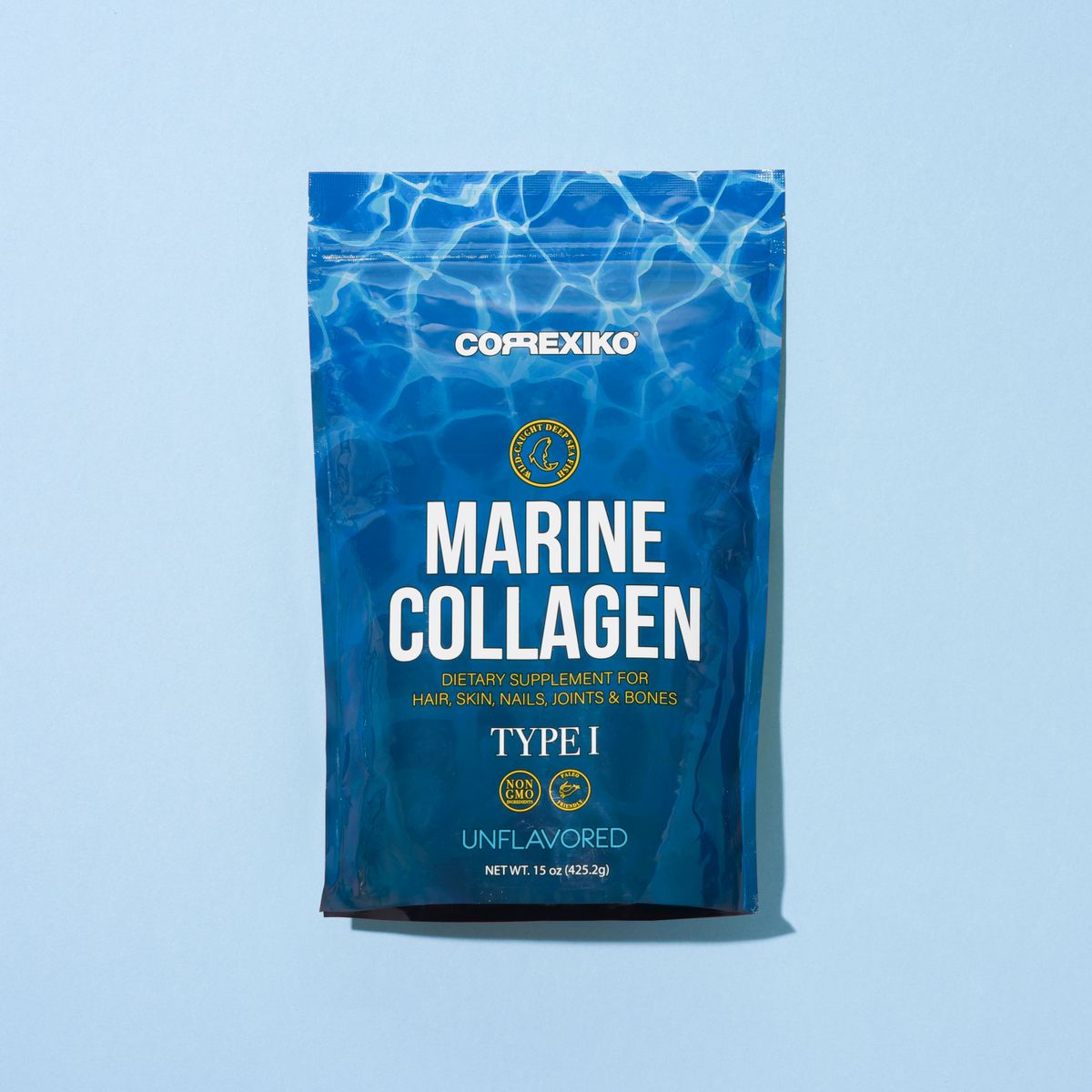
Sports Research Marine Collagen Peptides
Marine collagen has the smallest molecular weight of any collagen type, which means your body absorbs it faster than bovine versions. Sports Research sources its peptides from wild-caught barramundi and red snapper.
Each scoop provides 10g of Type I collagen — the exact type your skin uses most. It’s pescatarian-friendly and ideal for anyone who avoids beef. Note: it can clump in cold liquid, so mix into room-temp water first.
Vital Proteins Collagen Peptides Capsules
If powders aren’t your thing, capsules turn collagen into a swallow-and-go habit. This bottle holds 360 capsules — enough for a full month at the recommended six-capsule dose taken twice daily.
The peptides come from the same grass-fed pasture-raised bovine source as the powder version. Travelers love the no-mess format. The trade-off: you swallow 12 capsules per day to hit a meaningful dose, which puts off some users.
Vital Proteins Collagen Gummies
These gummies use VERISOL bioactive collagen peptides — the exact type studied in clinical trials for wrinkle reduction and skin elasticity. Each serving (four gummies) delivers 2.5g, which sits at the lower end of the effective range but compounds with daily use.
The grape flavor tastes more like a treat than a supplement. Reviewers say the chewable format makes consistency easy. Note: they contain corn syrup and sugar, so they’re not for low-carb diets.
L’Oréal Paris Collagen Moisture Filler
Topical collagen products work differently than supplements. The molecule is too large to penetrate the skin barrier, so this cream isn’t rebuilding structural collagen from the outside. What it does well: lock in moisture so existing skin looks plumper and smoother by morning.
L’Oréal pairs soluble collagen with shea butter, glycerin, and hyaluronic-style hydrators. In a 4-week consumer evaluation, 78% of women reported visibly filled-in wrinkles. It absorbs without grease and works under makeup.
How to choose the right collagen product for your goals
The right pick depends less on the brand and more on your routine. To narrow the field quickly, use these four filters.
Skin and beauty? Pick Type I & III peptides. Joint support? Look for Type II. Full-body benefits? Multi-collagen formulas cover all bases.
If you’ll skip a powder shake, gummies or capsules win. Habit consistency beats theoretical potency every single time.
Pescatarians need marine collagen. Anyone avoiding bovine should skip Types from beef hides. Vegan? Plant-based “collagen boosters” only support production — they don’t contain real collagen.
Aim for 2.5g–10g of hydrolyzed collagen daily. Brands marketing “20g” doses aren’t necessarily better — your body uses what it needs and excretes the rest.
Above all, pair any oral collagen with a vitamin-C-rich diet or supplement. Without vitamin C, your fibroblasts cannot synthesize new collagen, no matter how many peptides you flood your system with. Citrus, bell peppers, and a good moisturizer round out the routine. Speaking of moisturizers, our roundup of the best moisturizers for every skin type covers what to layer on top.
Realistic timeline: when to expect results
Patience matters more than potency. Most clinical trials report visible changes between weeks 8 and 12. Meanwhile, here’s what users typically notice along the way.
No visible change yet. Your body is absorbing peptides and routing them to the cells that need them most.
Nails grow noticeably faster and feel less brittle. This is usually the first physical cue collagen is working.
Skin feels more hydrated and bouncier when you press on it. Friends might say you “look rested.”
Fine lines soften, texture smooths, joints feel easier. This is the milestone clinical trials measure.
Pair collagen with other beauty habits and the wins compound. Our guides on skincare routines by skin type and how to regrow thinning hair naturally stack neatly with a daily collagen ritual.
Final verdict: are collagen products worth your money?
For most adults over 30, the answer leans toward yes — with caveats. Quality collagen products genuinely improve skin elasticity, hydration, and nail strength when taken at clinically studied doses for at least 8 weeks. Furthermore, the research is no longer fringe. Multiple peer-reviewed trials back the headline claims, and the side-effect profile stays remarkably clean.
That said, collagen is not a face-lift in a tub. It works gradually, alongside sunscreen, hydration, and good sleep. Skip any of those pillars and your collagen routine loses leverage. Match the format to your habits, commit for at least three months, and you’ll likely see why the category keeps growing despite the noise.
